
If you’re comparing heating systems, something probably prompted it. Maybe your furnace is getting up there in years, your AC barely made it through August, or a contractor handed you a heat pump quote and you’re not sure you actually need one.
Heat pumps have a reputation for efficiency, and gas furnaces for putting out serious heat on a frosty morning. Both earn those reputations, so there’s rarely an obvious winner on paper.
The equipment already in your house often settles it. Someone replacing a 20-year-old furnace and AC at the same time has different options than someone whose furnace is five years old and running fine.
At Dolan Design HVAC & Plumbing, we’ve spent more than 30 years helping homeowners across Central and Eastern North Carolina work through decisions like this one.
Before you invest in new equipment, it helps to know what you’re actually getting, what might need to change in your home, and whether the extra cost will pay off for you.
Quick Answer: Is a Heat Pump Better Than a Furnace?
A heat pump can be a better choice than a gas furnace in areas with mild winters because it provides energy-efficient heating and air conditioning in one system. Gas furnaces, however, deliver hotter air and may cost less to operate in homes with affordable natural gas. The better option depends on your climate, existing equipment, installation costs, utility rates, and comfort preferences.
How Heat Pumps and Gas Furnaces Work
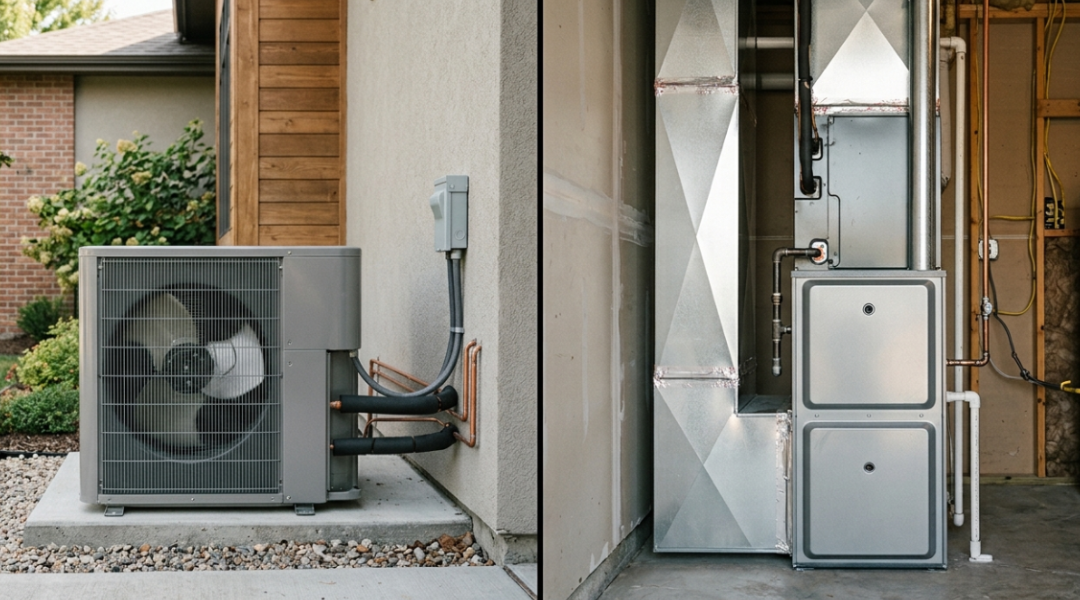
A heat pump moves heat instead of making it. In winter, it pulls heat from the outdoor air (even cold air holds some) and brings it inside. In summer, it runs in reverse and works as your air conditioner.
A gas furnace burns natural gas to create heat, and a blower pushes that warm air through your ducts. It only heats, so it’s paired with a separate central air conditioner for summer.
| Feature | Heat Pump | Gas Furnace |
| How it heats | Moves heat from the outdoor air | Burns natural gas |
| Cooling | Built in | Needs a separate AC |
| Fuel | Electricity | Natural gas, plus electricity for the blower |
| Air from the vents | Warm and steady | Noticeably hotter |
| Below freezing | Output drops as it gets colder; backup heat may kick in | Steady output regardless of outdoor temperature |
| Typical lifespan | About 10 to 15 years | About 15 to 20 years or more |
| Installation needs | May need electrical upgrades | Needs gas service and proper venting |
Why North Carolina Winters Favor Heat Pumps
Around Louisburg, Wake Forest, Raleigh, and Rocky Mount, a typical January day can start below freezing and climb into the 50s by afternoon. We get cold nights and the occasional ice storm, but we rarely see weeks of sustained subfreezing weather.
Heat pumps do their most efficient work in that kind of moderate weather, and recent winters have leaned their way. The North Carolina State Climate Office’s 2026-27 winter outlook points out that 13 of the state’s past 15 winters ran warmer than the 20th-century average, and with a very strong El Niño in place, forecasters expect above-normal temperatures and fewer cold air outbreaks this season.
When summer comes around, that same system becomes your air conditioner. Since the AC often runs from May into October here, one system that covers both jobs means one less major piece of equipment to buy and maintain.
What Happens When It Drops Below Freezing?
Mild winters still have their moments. Last February, one storm brought parts of eastern North Carolina their first foot-plus of snow since the 1980s, according to the State Climate Office’s recap of the 2025-26 winter.
Modern heat pumps keep heating well below 32°F, but their output drops as the temperature falls. When the heat pump can’t keep up on its own, auxiliary heat fills the gap. In most all-electric homes, that’s electric heat strips in the air handler, which work well but cost more to run. In a dual-fuel setup, the gas furnace takes over.
Some backup heat on the coldest nights is normal. Before you buy, find out whether the system you’re quoted is sized to carry your home through those nights without leaning on backup heat for hours at a time.
What to ask: How will this system perform at our area’s winter design temperature, and at what outdoor temperature will backup heat start running?
Start With the Equipment You Already Have
Your current equipment decides the answer more often than efficiency ratings do. A system that looks better on paper may not be worth it if switching means removing equipment with years of life left.
| Your situation | What often makes sense |
| AC is failing, furnace is newer and working well | Replace the AC, or add a heat pump that works with your existing furnace |
| Furnace and AC are both near the end | Compare a full heat pump system against a new furnace and AC together |
| Your current heat pump is worn out | Replace it with a newer heat pump, usually with few changes to your setup |
| All-electric home that relies on heat strips or baseboard heat | A heat pump can cut heating costs significantly |
| You have natural gas and want lower bills | Compare estimated operating costs for both before switching |
Your AC Is Failing, but Your Furnace Still Works
This is one of the most common situations we run into. If your furnace is only a few years old and running well, tearing it out to go all-electric rarely pays off.
You have two practical paths. You can go with an air conditioner replacement and keep the furnace as it is, or you can install a heat pump in place of the AC and pair it with the furnace you already have.
The second option gives you efficient electric heat through most of the winter with gas as the backup, as long as the furnace, indoor coil, and controls are compatible.
What Is a Dual-Fuel System?
A dual-fuel system pairs an electric heat pump with a gas furnace. The heat pump handles heating in milder weather, and the furnace takes over once the outdoor temperature drops to a set changeover point.
For North Carolina homes with natural gas, it’s a practical way to get heat pump efficiency on the many mild days and furnace heat on the coldest ones. The tradeoff is the cost, since you’re buying and eventually maintaining two heating systems.
If a contractor recommends dual fuel, ask how they’ll set the changeover temperature and how that choice affects your gas and electric bills.
Heat Pump vs. Furnace Cost: What You’ll Actually Pay
Upfront Installation Costs
The price difference depends mostly on what you’re replacing. Swapping an old heat pump for a new one is usually straightforward. Converting a gas-heated home to all-electric may involve electrical upgrades, a new air handler, or duct changes, and those costs add up quickly.
Keep in mind that a heat pump handles both heating and cooling. If both of your systems need replacing, the fair comparison is a heat pump against a new furnace and a new AC together.
You may also have a few ways to bring installation costs down. Because Dolan Design is a Duke Energy Preferred Vendor, Duke customers may qualify for rebates and preferred pricing on eligible equipment. And if paying for a new system all at once isn’t realistic, flexible financing lets you spread the cost out over time.
Monthly Operating Costs
Efficiency ratings help, but your monthly bills come down to a few things:
- Your local electricity and natural gas rates
- The efficiency of the specific equipment (SEER2 for cooling, HSPF2 for heat pump heating, and AFUE for furnaces)
- How much heat your home needs, based on its size, insulation, and air leaks
- How often backup heat runs
Ask for an estimate of annual heating and cooling costs for each option using your actual utility rates, so you’re comparing real numbers instead of general claims about energy savings.
Will a Heat Pump Feel Different From a Furnace?
If you’re used to a gas furnace, it will definitely be an adjustment at first.
A furnace sends out short bursts of noticeably hot air, while a heat pump runs longer, steadier cycles with air that feels warm rather than hot.
Some people miss that blast of heat. Others prefer a house that stays even instead of swinging between a little too warm and a little chilly.
Variable-speed heat pumps feel the most consistent, and they pull more humidity out of the air during our muggy summers.
A New System Won’t Fix Every Cold Room
If your upstairs bedrooms never warm up, or one end of the house always lags behind the thermostat, new equipment may not fix it.
Common culprits include:
- Leaky or undersized ductwork
- Poor insulation
- Restricted airflow
Those problems carry right over to a brand-new system, so ask your contractor to find out why those rooms are uncomfortable before you replace anything.
Fixing duct leaks or airflow can sometimes do more than new equipment, for a lot less money.
5 Questions to Ask Before You Sign a Quote
A new heating system is one of the bigger purchases you’ll make for your home, and two quotes for the same job can look very different.
These questions make it easier to see what each one actually includes.
- Did you do a load calculation? Your new system should be sized to your home’s actual heating and cooling needs, not matched to the size of your old unit. Oversized and undersized systems both cause comfort and efficiency problems.
- What extra work is included? Electrical upgrades, duct changes, a new thermostat, or modifications to existing equipment can change the final price significantly. Make sure they’re spelled out in the quote.
- What will each option cost to run? Ask for estimated annual heating and cooling costs based on your local utility rates.
- How will it handle our coldest nights? For a heat pump, find out how it performs at the local design temperature and when backup heat kicks in.
- How long until it pays off? If you might sell in three or four years, a pricier system may not have time to earn back its cost. If you plan to stay 15 years, long-term operating costs and comfort deserve more weight.
A good contractor should be able to answer all five without hesitation. If a quote leaves any of them open, ask for the details in writing before you sign.
Frequently Asked Questions About Heat Pumps and Furnaces
Do I need new ductwork to switch from a gas furnace to a heat pump?
Most homes can switch from a gas furnace to a ducted heat pump without replacing their ductwork. A technician should still check the ducts for size, leaks, and airflow first, since undersized or leaky ducts can keep a heat pump from performing well. Homes with existing airflow problems may need some modifications.
Will a heat pump raise my electric bill?
If you switch from gas heat to a heat pump, your electric bill will likely go up, but your gas bill will drop or disappear. Whether your total energy cost rises or falls depends on your local electricity and gas rates, the efficiency of the new equipment, and how much heat your home needs.
What’s the difference between auxiliary heat and emergency heat?
Auxiliary heat turns on automatically when your heat pump needs help, while emergency heat is a thermostat setting you choose that runs only the backup heat. Emergency heat is meant for times when the heat pump itself isn’t working. If auxiliary heat seems to run constantly on mild days, it’s worth scheduling heating repair to find out why.
How long do heat pumps and gas furnaces last?
Heat pumps typically last about 10 to 15 years, while gas furnaces often last 15 to 20 years or more. The gap comes from how much each system runs. A heat pump handles both heating and cooling, so it works year-round, while a furnace sits idle for most of the summer.
Does a heat pump need more maintenance than a gas furnace?
A heat pump usually needs maintenance twice a year, while a gas furnace typically needs a tune-up once a year before heating season. Because a heat pump runs in every season, a spring visit for cooling and a fall visit for heating help catch problems early. A preventive maintenance plan keeps those visits on the calendar.
Is a heat pump safer than a gas furnace?
Heat pumps don’t burn fuel, so unlike gas furnaces, they can’t produce carbon monoxide. Gas furnaces are safe when they’re installed and maintained correctly, but any home with gas appliances should have working carbon monoxide detectors. In a dual-fuel system, the furnace still needs its regular safety checks.
Making the Right Call for Your Home
With our mild winters and long cooling season, a heat pump is a smart fit for a lot of North Carolina homes. Still, the best choice starts with what’s already in your house.
A furnace with plenty of life left can keep working alongside a new AC or heat pump, while a home replacing both systems at once is in a good position to compare a heat pump against a new furnace and AC side by side.
Whichever way you’re leaning, make the decision with a load calculation and operating cost estimates built around your home and your utility rates.
At Dolan Design HVAC & Plumbing, we’ll look at the equipment you have, explain each option and what it costs, and tell you plainly if your current system still has life left in it. We won’t recommend a replacement your home doesn’t need.
Contact Dolan Design HVAC & Plumbing to schedule an estimate, or call us at (919) 896-8630.